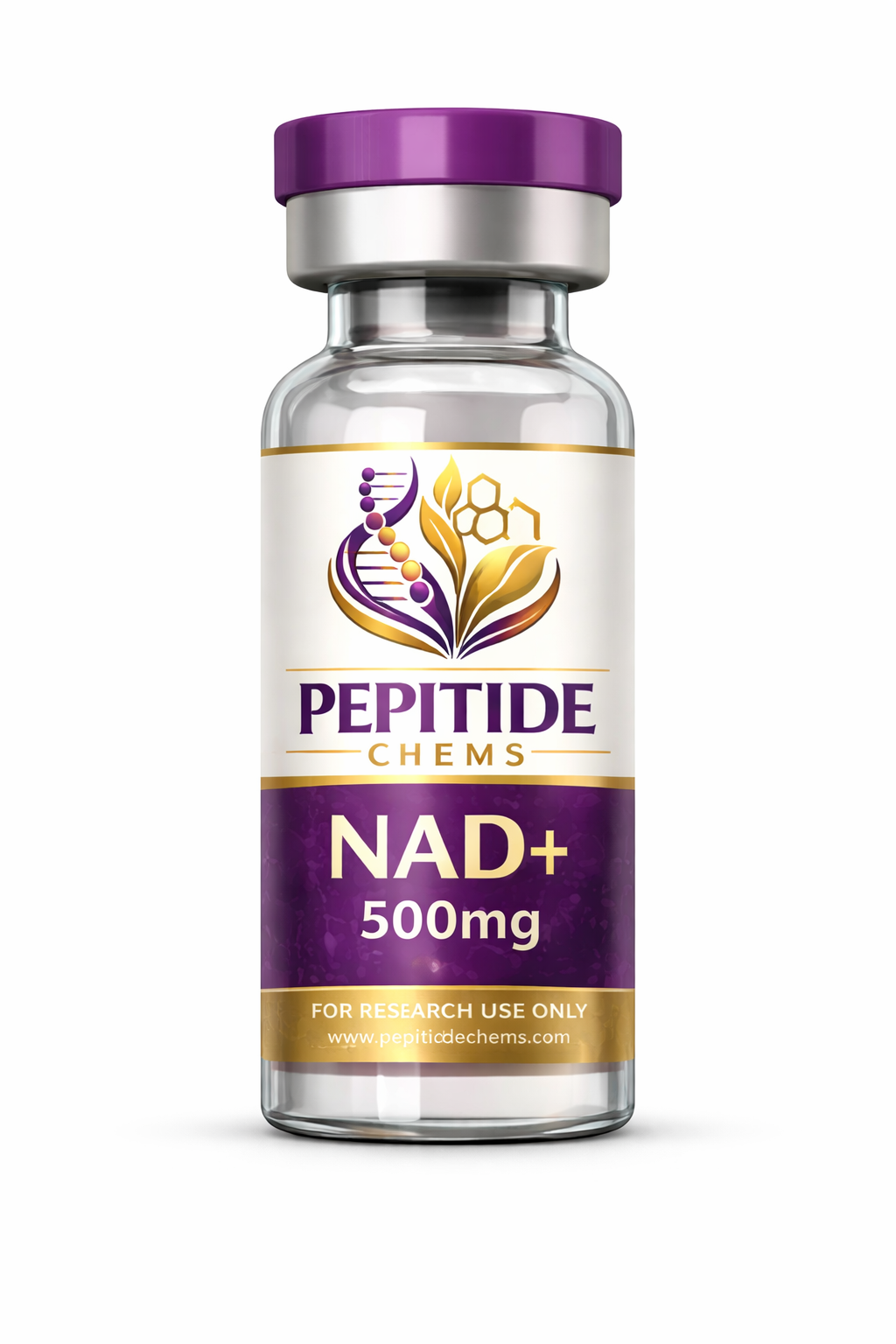
NAD+
Coenzyme studied in cellular energy and aging research.
Research Areas
Scientific Background
NAD+ (Nicotinamide Adenine Dinucleotide) is a coenzyme found in all living cells. Scientific literature has explored its role in cellular energy production, DNA repair mechanisms, and as a substrate for enzymes such as sirtuins and PARPs that are involved in various cellular processes.
Deep Dive: How It Works
NAD+ operates through two primary pathways: (1) As a coenzyme in redox reactions within the mitochondrial electron transport chain, directly driving ATP synthesis through Complexes I, III, and IV; (2) As a substrate consumed by PARP enzymes during DNA damage repair and by sirtuins during histone deacetylation. The salvage pathway (NAMPT → NMN → NAD+) is the primary recycling mechanism, and its efficiency decreases with age, contributing to the age-related decline in NAD+ levels. CD38, an NAD+-consuming ectoenzyme, increases with age and inflammation, further depleting NAD+ pools.
Key Insight
NAD+ is not a standalone solution — it functions as 'fuel' for repair enzymes. Without adequate substrate (NAD+), sirtuins and PARPs cannot perform DNA repair regardless of other interventions. Think of NAD+ as the gasoline for the car's engine.
Optimization & Cofactors
Published research on compounds that support this peptide's mechanisms
Cofactor information is compiled from published nutritional and biochemical research. This is educational content, not supplementation advice. Consult a qualified healthcare provider.
Resveratrol
Take with NAD+ precursor in the morningActivates SIRT1, which requires NAD+ as substrate for deacetylation reactions
Baur et al. (2006, Nature) showed resveratrol + NAD+ pathway activation extends lifespan in mice
Apigenin
Can be taken throughout the day via chamomile tea or supplementNatural CD38 inhibitor — helps preserve NAD+ pools by blocking its degradation
Escande et al. (2013, Diabetes) demonstrated apigenin inhibits CD38 and raises intracellular NAD+
Vitamin B3 (Niacin)
Direct NAD+ precursor through the Preiss-Handler pathway
Alternative precursor pathway to NMN/NR; foundational B-vitamin for NAD+ biosynthesis
CoQ10 (Ubiquinone)
Morning with fatty meal for absorptionWorks alongside NAD+ in the electron transport chain at Complex III
CoQ10 and NAD+ are co-dependent in mitochondrial respiration
Compatibility & Stacking Guide
Research on combining peptides based on published mechanisms
Compatibility information is based on published mechanisms of action. No clinical trials have validated most combinations in humans. This is educational content only.
Compatible Compounds (Research-Based)
SS-31 stabilizes mitochondrial membranes while NAD+ fuels the electron transport chain
GHK-Cu activates gene expression programs that benefit from NAD+-dependent sirtuin activity
Synergistic SIRT1 activation — resveratrol activates, NAD+ fuels the enzyme
Timing Guide from Published Research
Published research protocols typically administer NAD+ precursors (NMN/NR) in the morning, aligning with circadian NAD+ cycling. Studies show NAD+ levels naturally peak in active phase (daytime).
Published Clinical Study Protocols
Data from peer-reviewed publications and registered clinical trials
These protocols are cited from published research for educational purposes only. They do not constitute recommendations. All research must be conducted under appropriate institutional oversight.
NMN Supplementation in Middle-Aged Adults
Yoshino et al., Science, 2021
250mg NMN daily for 10 weeks in postmenopausal women with prediabetes
Improved muscle insulin sensitivity and insulin signaling by ~25%
NAD+ Repletion via NR in Aging
Martens et al., Nature Communications, 2018
1000mg NR daily (2x500mg) for 6 weeks in healthy older adults aged 55-79
NAD+ metabolome increased by ~60%, systolic blood pressure reduced by 5 mmHg
Synergy & Cofactor Research
How this compound interacts with other molecules in research
NAD+ & Resveratrol
Resveratrol activates SIRT1, but SIRT1 requires NAD+ as a substrate. Without adequate NAD+, sirtuin activation is limited.
Resveratrol allosterically activates SIRT1; NAD+ provides the fuel SIRT1 needs to function. Combined, they enhance mitochondrial biogenesis via PGC-1α activation.
NAD+ & CD38 Inhibitors
CD38 enzyme degrades NAD+ increasingly with age. Compounds like apigenin (found in parsley and chamomile) may inhibit CD38, preserving NAD+ pools.
By inhibiting CD38-mediated NAD+ degradation while simultaneously providing NAD+ precursors, net cellular NAD+ levels are elevated more effectively.
Purity & Provenance
Why quality matters for research validity
NAD+ and its precursors (NMN, NR) are sensitive to heat, light, and moisture. Published research uses pharmaceutical-grade compounds with ≥98% purity verified by HPLC. Third-party COA should verify identity, purity, and absence of heavy metals.
Areas of Investigation
Laboratory Information
Technical specifications for research settings
This compound is intended for qualified scientific research only. Not for human or veterinary use. Not for diagnostic or therapeutic applications. Researchers must comply with all applicable regulations in their jurisdiction.
Store at -20°C for long-term stability. Protect from light and moisture.
Lyophilized powder
>98% by HPLC
Soluble in water and buffer solutions
Handle with standard laboratory precautions. For in vitro research use.
Deepen Your Research
Published literature and clinical trial registries
Published Literature
Numerous peer-reviewed studies have examined NAD+ in the context of cellular metabolism. Research institutions continue to investigate its potential applications in aging-related research.
Regulatory Classification
NAD+ is available as a research compound. Consult applicable regulations in your jurisdiction before acquisition.
Important Research Notice
This information is compiled from scientific literature for educational purposes only. This website does not sell, distribute, or recommend any compounds for human use. All compounds discussed are for qualified research purposes only.