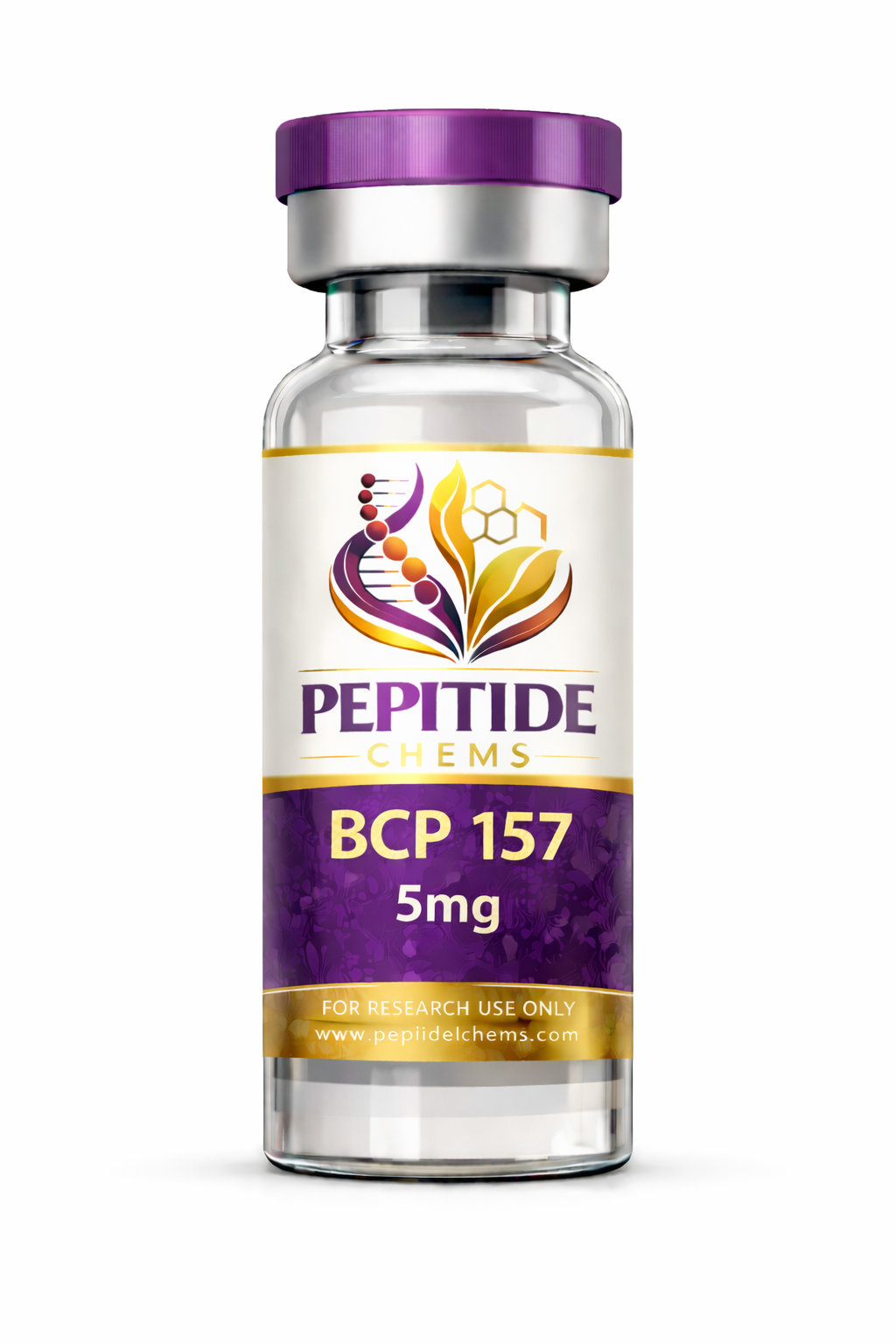
BPC 157
Gastric pentadecapeptide studied in tissue repair research.
Research Areas
Scientific Background
BPC-157 (Body Protection Compound-157) is a synthetic peptide sequence derived from human gastric juice. Scientific literature has examined its interactions with tissue repair mechanisms in laboratory settings.
Deep Dive: How It Works
BPC-157's investigated mechanisms operate through several parallel pathways: (1) ANGIOGENESIS: Upregulates vascular endothelial growth factor (VEGF), promoting the formation of new blood vessels to supply nutrients and oxygen to damaged tissue; (2) NITRIC OXIDE (NO) SYSTEM: Modulates the NO pathway, which is crucial for vasodilation, blood flow regulation, and cellular signaling during repair; (3) GROWTH FACTOR INTERACTIONS: Research indicates interactions with EGF (epithelial growth factor), HGF (hepatocyte growth factor), and FGF (fibroblast growth factor) receptors, potentially amplifying the body's endogenous repair signaling; (4) ECM REMODELING: Studies show enhanced organization of collagen fibers, shifting from disorganized scar tissue patterns toward more organized, functional tissue architecture; (5) CYTOPROTECTION: The 'body protection compound' name comes from its gastric origin — it demonstrates mucosal protective properties in gastrointestinal tissue models.
Key Insight
BPC-157 has 100+ published studies but virtually all are preclinical (rodent/in vitro). This is the critical gap — impressive laboratory data does not yet translate to proven human efficacy. Researchers should weigh this when evaluating the evidence base.
Optimization & Cofactors
Published research on compounds that support this peptide's mechanisms
Cofactor information is compiled from published nutritional and biochemical research. This is educational content, not supplementation advice. Consult a qualified healthcare provider.
Vitamin C
500-1000mg daily dividedSupports collagen synthesis and angiogenesis enhanced by BPC-157 VEGF activation
BPC-157 stimulates VEGF; vitamin C required for collagen in new vessels
Zinc
25mg with mealsEssential for wound healing enzymes complementing BPC-157 repair mechanisms
Lin et al. (2017) showed zinc supports multiple wound healing phases
Collagen Peptides
10-15g dailyProvides substrate for tissue repair processes BPC-157 stimulates
Building blocks alongside BPC-157 growth factor activation
Compatibility & Stacking Guide
Research on combining peptides based on published mechanisms
Compatibility information is based on published mechanisms of action. No clinical trials have validated most combinations in humans. This is educational content only.
Compatible Compounds (Research-Based)
The Wolverine Stack — BPC-157 builds blood supply (VEGF); TB-500 directs cell migration
GHK-Cu activates remodeling genes; BPC-157 drives angiogenesis — different repair phases
GH axis supports systemic recovery; BPC-157 targets local tissue repair
Timing Guide from Published Research
Preclinical protocols administer BPC-157 near site of interest. Consistent daily administration showed better outcomes than intermittent in rodent models. BPC-157 + TB-500 is the most-studied combination.
Published Clinical Study Protocols
Data from peer-reviewed publications and registered clinical trials
These protocols are cited from published research for educational purposes only. They do not constitute recommendations. All research must be conducted under appropriate institutional oversight.
Gastrointestinal Cytoprotection (Preclinical)
Sikiric et al., Current Pharmaceutical Design, 2018 (Review)
Various preclinical models using µg/kg dosing in rodent gastric lesion models
Demonstrated mucosal protection, reduced lesion size, and accelerated healing in multiple GI tissue models.
Tendon Healing Model (Preclinical)
Chang et al., Journal of Applied Physiology, 2011
10 µg/kg administered locally in rat Achilles tendon transection models
Improved biomechanical strength, increased collagen fiber organization, and enhanced tenocyte proliferation vs. control.
Synergy & Cofactor Research
How this compound interacts with other molecules in research
BPC-157 + TB-500 Combination
These peptides target complementary tissue repair pathways: BPC-157 stabilizes the vascular environment while TB-500 enhances cellular migration to injury sites.
BPC-157 upregulates VEGF and growth factors, 'preparing' the repair site with blood supply and signaling. TB-500 sequesters G-actin, promoting cytoskeletal rearrangement needed for cells to migrate into the prepared area. Sequential rather than redundant pathways.
Purity & Provenance
Why quality matters for research validity
BPC-157 is a 15-amino acid fragment of body protection compound. Verify via HPLC (≥98%) and mass spec. Note: BPC-157 was removed from FDA Category 2 list in April 2026, restoring compounding eligibility.
Areas of Investigation
Laboratory Information
Technical specifications for research settings
This compound is intended for qualified scientific research only. Not for human or veterinary use. Not for diagnostic or therapeutic applications. Researchers must comply with all applicable regulations in their jurisdiction.
Store at -20°C. Protect from light and moisture.
Lyophilized powder
>98% by HPLC
Soluble in water and saline
For in vitro tissue research applications only.
Deepen Your Research
Published literature and clinical trial registries
Published Literature
Published studies, primarily from laboratory research, have examined BPC-157's molecular mechanisms. Human clinical data remains limited.
Regulatory Classification
BPC-157 is classified as an investigational compound. The FDA has designated it as not available for compounding. For qualified research purposes only.
Important Research Notice
This information is compiled from scientific literature for educational purposes only. This website does not sell, distribute, or recommend any compounds for human use. All compounds discussed are for qualified research purposes only.