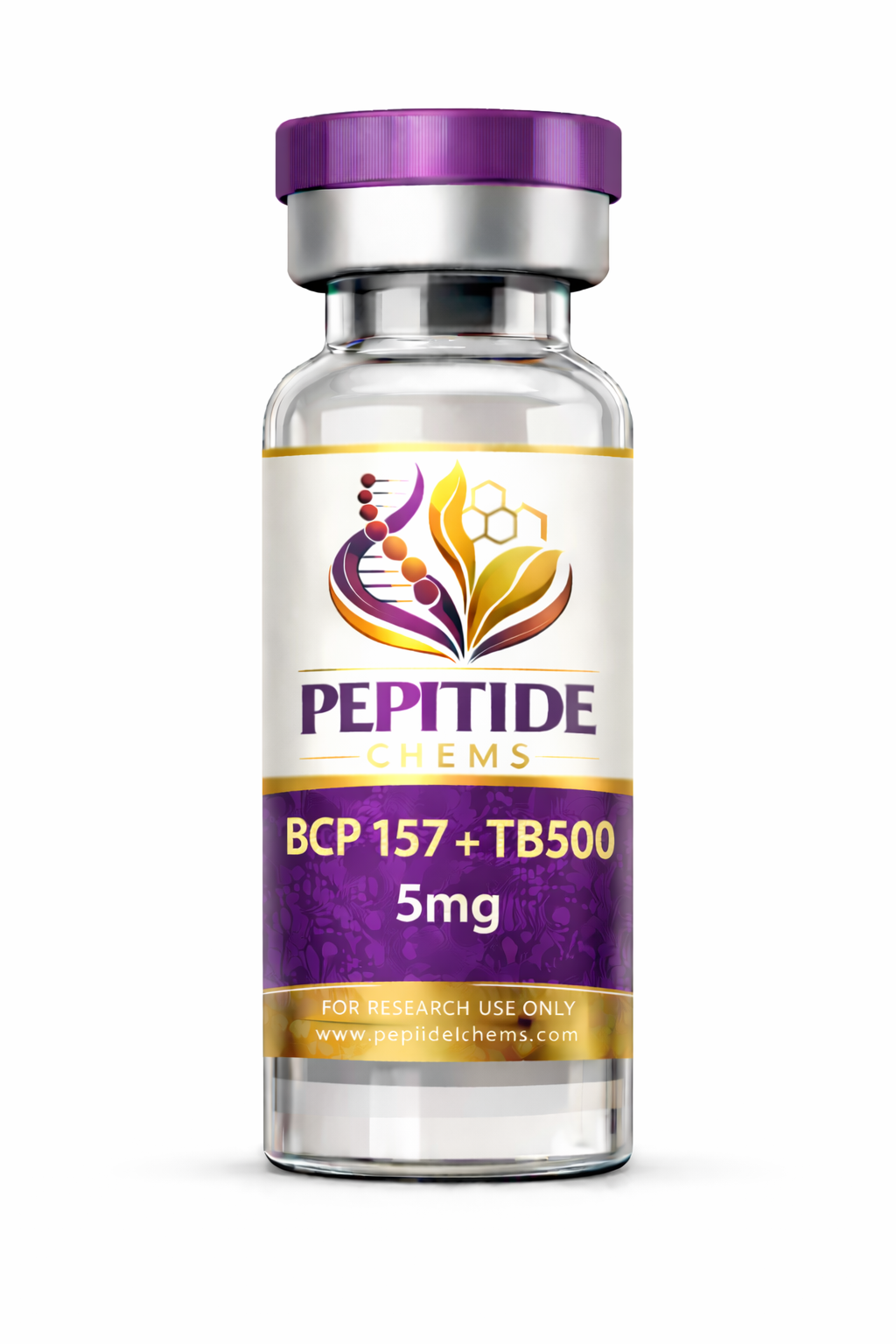
BPC+TB500
Research blend studied in tissue biology investigations.
Research Areas
Scientific Background
This research blend combines two peptides that have been individually studied in tissue biology research. BPC-157 and TB-500 have distinct molecular mechanisms.
Deep Dive: How It Works
The theoretical synergy of this blend involves two sequential phases: PHASE 1 — SITE PREPARATION (BPC-157): Upregulates VEGF to establish blood supply at the repair site; modulates nitric oxide for vasodilation and nutrient delivery; activates growth factor receptors (EGF, HGF, FGF) to signal repair initiation; stabilizes the local inflammatory environment. PHASE 2 — CELLULAR MOBILIZATION (TB-500): Sequesters G-actin to maintain mobile actin pools; enables fibroblasts, keratinocytes, and endothelial cells to reorganize their cytoskeletons for migration; promotes directional cell movement toward the prepared site; supports tissue remodeling through improved collagen fiber organization. This 'prepare then populate' sequence is the basis for research interest in the combination.
Key Insight
The combination represents a 'systems approach' to tissue repair — addressing blood supply (BPC-157) AND cell delivery (TB-500) simultaneously. However, it's important to note that nearly all data on both compounds is preclinical. The combined effect in human tissue has not been established in randomized controlled trials.
Optimization & Cofactors
Published research on compounds that support this peptide's mechanisms
Cofactor information is compiled from published nutritional and biochemical research. This is educational content, not supplementation advice. Consult a qualified healthcare provider.
Vitamin C
500-1000mg daily dividedSupports collagen and angiogenesis from both BPC-157 and TB-500
Critical for VEGF-mediated angiogenesis (BPC-157) and ECM (TB-500)
Zinc
25mg with mealsEssential for wound healing, cell division, and immune function
Supports multiple repair phases activated by the combination
Glycine + Proline
Glycine 3-5g before bedKey collagen amino acids — demand increases with dual peptide stimulation
Provides building blocks for accelerated tissue remodeling
Compatibility & Stacking Guide
Research on combining peptides based on published mechanisms
Compatibility information is based on published mechanisms of action. No clinical trials have validated most combinations in humans. This is educational content only.
Compatible Compounds (Research-Based)
Timing Guide from Published Research
Pre-combined Wolverine Stack format. Both components restored to FDA compounding eligibility in April 2026.
Synergy & Cofactor Research
How this compound interacts with other molecules in research
BPC-157 + TB-500: 'Prepare & Populate'
Two complementary pathways addressing different phases of tissue repair: BPC-157 creates the conditions for repair, TB-500 enables the cellular response.
BPC-157 establishes vascular supply and growth factor signaling at the repair site. TB-500 enables reparative cells to migrate to this prepared environment. The combination addresses both 'infrastructure' and 'workforce' aspects of tissue repair.
Oncological Screening Consideration
Because both peptides have pro-angiogenic properties, there is a theoretical concern about facilitating growth of undiagnosed malignancies. Comprehensive cancer pre-screening is emphasized in research literature.
Pro-angiogenic factors can potentially support tumor vascularization. This is a standard consideration in angiogenesis-related research and is not unique to these compounds.
Purity & Provenance
Why quality matters for research validity
Combined formulations require verification that BOTH peptide sequences are intact. Independent COA should confirm BPC-157 (15-aa) and TB-500 (7-aa fragment) purity individually. April 2026 FDA reversal restored both.
Areas of Investigation
Laboratory Information
Technical specifications for research settings
This compound is intended for qualified scientific research only. Not for human or veterinary use. Not for diagnostic or therapeutic applications. Researchers must comply with all applicable regulations in their jurisdiction.
Store at -20°C. Protect from light.
Lyophilized powder blend
>97% by HPLC
Soluble in water
For in vitro research applications only.
Deepen Your Research
Published literature and clinical trial registries
Published Literature
Individual components have been studied in published literature. Combined effects remain an area of research interest.
Regulatory Classification
Both BPC-157 and TB-500 are investigational compounds classified by the FDA as not available for compounding. For qualified research purposes only.
Important Research Notice
This information is compiled from scientific literature for educational purposes only. This website does not sell, distribute, or recommend any compounds for human use. All compounds discussed are for qualified research purposes only.